20 February 2026
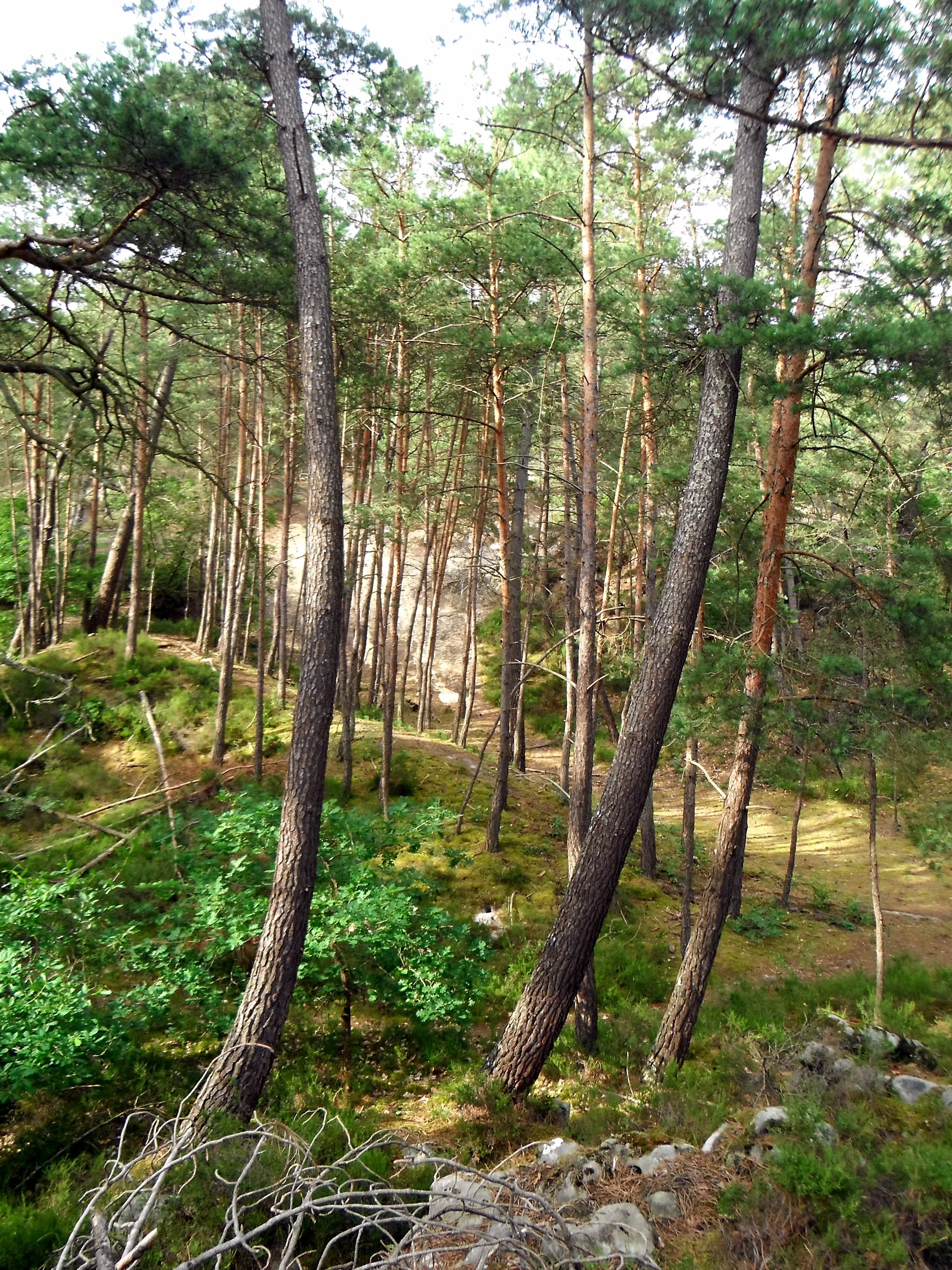
Twenty-five thousand hectares. That is the size of Fontainebleau Forest, and it is the kind of number that only makes sense when you are standing inside it, looking up at the canopy and realising that you cannot hear a single car, a single notification, a single thing that requires your attention. The forest begins, essentially, at the back gate of Le Jardin at Moulin à Rêves, and from there it extends in every direction — ancient oaks, silver birch, Scots pine, and the sandstone boulders that have made this place famous among climbers, painters, and people who simply like to walk.
We have been walking these trails for years, and we still find new paths. Here are the ones we recommend most often to guests, arranged roughly by ambition.
For a Gentle Morning: The Barbizon Painters' Trail
Start from the eastern end of Barbizon village, ten minutes by car from the compound. The Sentier des Peintres is a circular walk of about four kilometres that follows the routes the Barbizon painters took to reach their favourite subjects. Small plaques along the way reproduce the paintings alongside the views that inspired them. The terrain is flat and well-maintained, suitable for all ages, and the walk takes about an hour at a pace that allows for stopping and looking — which is the whole point.
Best in spring, when the forest floor is thick with wood anemones, or in autumn, when the oaks turn and the light goes amber. Bring a camera. Leave the headphones at home.
For an Adventure: Gorges de Franchard
This is the walk that makes people fall in love with Fontainebleau. The Gorges de Franchard are a landscape of sandstone chaos — massive boulders tumbled into narrow ravines, pine trees growing from impossible angles, and views that open suddenly onto heathland that could be Scotland if it were not so warm. The main circuit is about six kilometres and takes two to three hours, depending on how often you stop to climb things.
The trail is well-marked (follow the blue blazes for the standard route) but involves some scrambling over rock and uneven terrain. Good shoes are essential. Children love it — the boulders are irresistible — but keep an eye on the smaller ones near the steeper drops. Pack water and a picnic. There are flat rocks at the summit that were designed, apparently by geology, for exactly this purpose.
The car park at Franchard is about twenty minutes from the compound. Arrive before ten on weekends to guarantee a spot.
For a Full Day: The Tour Denecourt
If you want to spend a whole day in the forest, the Tour Denecourt circuit takes you through some of its most varied and beautiful terrain. Named after Claude-Francois Denecourt, the 19th-century trail blazer who first mapped and marked the forest paths (he is sometimes called the father of hiking in France), this route covers about twelve kilometres and passes through old-growth oak forest, open heath, sandstone ridges, and the quiet clearings where deer graze in the early morning.
The walk takes five to six hours with stops, and we recommend starting early. Pack a lunch — the clearing at the Rocher Canon is a particularly good spot — and wear boots that can handle mud after rain. The forest floor in Fontainebleau is sand over sandstone, which means it drains quickly, but the lower sections can be soft after a wet spell.
For Families with Small Children: Rocher des Demoiselles
A short, shaded walk from a car park to a cluster of sandstone boulders that children will immediately claim as a castle, a spaceship, or whatever their imagination requires. The walk itself is about two kilometres round-trip, flat and easy, and the boulders are low enough to climb safely with supervision. There is usually nobody else there, which adds to the sense of discovery.
Combine it with a stop in Milly-la-Foret on the way back — ice cream from the shop on the square, and a wander through the herbs garden at the old chapel decorated by Jean Cocteau.
For Bouldering Enthusiasts
Fontainebleau is one of the world's great bouldering destinations, and if anyone in your group climbs, they will already know this. The circuits are colour-coded by difficulty — white and yellow for beginners, orange and blue for intermediate, and red and black for those who know what they are doing. The boulders at Bas-Cuvier and Elephant are the most popular, but there are quieter circuits throughout the forest.
We can arrange crash pad rentals and guide recommendations for guests who want to try bouldering for the first time. The sandstone here is uniquely textured — grippy and sculpted by wind — and even a complete beginner can usually manage a few of the easier problems. The sense of achievement is disproportionate to the height.
Practical Notes
The forest is open year-round and free to enter. In summer, the trails can be busy on weekends — go early, or mid-week, for solitude. In autumn and winter, you will often have the paths to yourself. The forest is home to deer, wild boar, and a remarkable variety of birds. You are unlikely to see a boar (they are shy), but you will hear woodpeckers, jays, and, in spring, the nightingale.
We keep a collection of trail maps at each of the houses and are always happy to recommend routes based on your group, your fitness level, and the weather. The forest is the main reason many of our guests return, and we understand why. There is something about walking among trees that have been growing since before the Revolution that puts everything else into perspective.
Moulin à Rêves sits at the edge of Fontainebleau Forest, near Barbizon. The forest is accessible on foot from the compound. Get in touch to plan your stay.